To anyone and everyone who is suffering from loss, grief, depression
or a challenging time of life. The sun will rise again!
 Photo credit - me - Sunset at Naples beach, Florida Photo credit - me - Sunset at Naples beach, Florida |
Monday, February 22, 2016


Monday, May 4, 2015
Miriam
 Have you ever had a transformative day? It’s a rare thing,
but oh so powerful. I've had a few and they often have something to do with
meeting people that are far removed from my own personal context.
Have you ever had a transformative day? It’s a rare thing,
but oh so powerful. I've had a few and they often have something to do with
meeting people that are far removed from my own personal context.
Recently, I met a young woman who has just completed her masters
of Divinity. A beautiful, charming, intelligent, spiritually enlightened person
who is hoping to be ordained as a United Church minister in May. Miriam is
confined to a wheelchair, her body and voice corrupted by a cruel disease. Understanding
her speech was difficult at first – the words so hard for her to produce. I
could imagine her frustration as she tried to express the thoughts churning in
her mind – such intelligent thoughts that came out laboured yet so articulate.
I attended two workshops with Miriam and was awed by her
unabashed desire to participate in the discussions and activities. There was
no holding her back and there will be no holding her back in the future. This
is a woman with strength, substance and soul. She is going places and has it in her to make
the world a better place.
In the Old Testament, Miriam was the older sister of Moses.
She also became Israel’s first female prophet. In the Exodus story, after crossing the Red Sea, Miriam leads
a group of women in a song that scholars say is one of the oldest poems of the
Bible. Miriam wasn’t perfect – she had her flaws, but she had the tenacity to
stand up for herself and her faith during a time of struggle and hardship.
I’m sure it’s not the first time that these two Miriams have
been compared, but I think the Miriam I met the other day was as much an
inspiration to me as the Biblical Miriam would have been to her contemporaries
in the Old Testament story from about 3500 years ago.
Tuesday, April 29, 2014
God's Not Dead...or is He?

Just before Easter I saw the movie "God’s Not Dead." At
this time of year there are a plethora of films relating to the Bible – “Noah’s
Ark” is another one that comes to mind, but I have yet to see it. I thought “God’s
Not Dead” would be interesting as it attempts to debate the existence of
God...a debate that has raged on since Old Testament days. Even Abraham, the
father of Judaism and Christianity had his work cut out for him. Not only did
he have to convince his people that God existed, but to follow him to an
unknown land, where their future was gravely uncertain. Then and now, no proof
exists and no movie, book or religious leader can elucidate the truth. Faith
has always been, and will likely always be the only path to God, even if people
return after near-death experiences believing they have met with the divine.
The problem with such movies is not the debate itself –
questions and discussion are valuable tools for growth and learning – but when
a story is woven together with clichés and stereotypes, there can be no debate
or even discussion. Kevin Sorbo, who played Hercules for many years, takes on
the role of a college philosophy professor who bullies his students into
declaring in writing that ‘there is no God.’ Only one student stands up to him
and refuses to comply. This sets up the conflict: With contempt, the professor
tells the student that if he can convince the class that God exists in three
twenty minute lectures, he will pass the course. If not, he will fail and
compromise his entire future.
Unfortunately, anyone who has the vaguest curiosity about
this question will likely lose interest at the get-go. The good guys are
believers and the bad guys are atheists. Hmm, is there no such thing as a good
atheist? The characters are all so one-dimensional that it is impossible to
empathize with them or believe in their transformation. A poor script cannot carry a movie, so even if the acting had been wonderful (which was not the case) the movie couldn't possibly succeed. Guess what happens? Not only does the student convince the entire class that God exists--in sixty minutes, but he also convinces his ornery professor. (Sorry for the spoiler.)
As for the topic? It’s current, it’s important and it’s
interesting. But if people really want to delve into the question of God’s
existence they should do some of their own research or join an open-minded church. There are
hundreds of thousands of books written on this subject and they go a lot deeper
than ‘free will’ or ‘God having a role in evolution.’ I would love to see a film that tackles this
topic with depth and intelligence. In the meantime, I’ll just continue watching
clever and fun films like “The Grand Budapest Hotel!”
Tuesday, July 16, 2013
For the Love of Words
.jpg)
Words, words, words. Sometimes we use too many when we speak (and write) and sometimes we use too few. Do you use words that most people are unfamiliar with or do you speak and write with clarity and concision? Are you laconic or verbose?
If you’ve been reading my blog, you know that I love working with the English language. I have a passion for writing and I love playing word games like Scrabble and Boggle, and doing crosswords. I’ve even created my own word puzzle book called “Wordsynerd.” (see: Amazon.com)
Good writers know that one of the most important aspects of written communication is to get their message across in a clear and concise way. This means saying what they have to say with a few strong, meaningful words rather than running on with words that most people don’t understand and a message that is swallowed up in a quagmire of garble.
Consider this excerpt from a recent National Post article:
My experience, and the recent conduct of this organization, are redolent of the most frequently invoked failings of the working press: Its self-appointed leaders, in the CAJ [Canadian Association of Journalists] and otherwise, are morally bankrupt myth-makers, full of self-righteousness, endlessly attending workshops and conferences in which they ululate from the podium about rights, duties, and the perfectly informed society. This hypocrisy and claptrap dishonours the majority of working journalists who are, in fact, despite a frequent lack of thoroughness, relatively fair-minded men and women trying to do their jobs and report it as it is. Black, Conrad (2013, June 22). Journalism’s self-righteous myth-makers. National Post. Retrieved from http://fullcomment.nationalpost.com
Did you get past the first sentence? Do you know what “ululate” means? I have nothing against the occasional abstract word that is thrown into a speech or an article and if I’m captured by the author’s style and content, I will take the time to find out what it means. Building our vocabulary keeps our minds sharp, but if a writer tries to impress me with big words and a lofty writing style, the opposite will be achieved. For me, one of the biggest faux-pas in writing is to look down on the reader with pompous, irreverent language. Anyone can dress up a piece of writing with clever words that they find in the dictionary or thesaurus, but will the reader be engaged? No matter how interesting the subject matter is, if it is drowned in literary clutter, the less compelling the message will be. Thank you, Conrad Black, for the example of how NOT to write.
I once wrote an article for a trade publication and the marketing director of the company rewrote it in a style that was convoluted and obscure, populating it with words that I would never use. I showed his article to three professional people and none of them had a clue what he was trying to say. When I showed them my article, they said it was straightforward and clear, and that they learned something from it. The marketing director’s revised article was published and I was embarrassed to have my name associated with it.
Here is another excerpt from an article written by a well-known Canadian journalist:
In the past few years, ADHD – attention deficit hyperactivity disorder – has become the go-to diagnosis for kids who can’t sit still in school. Today, almost every class includes some kid who’s on Ritalin, Adderall or another stimulant. These medications calm them down and improve their focus. But astonishingly, their long-term effects are largely unknown. We’ve been conducting a vast, uncontrolled experiment on our children, with no idea whether the benefits outweigh the costs. Wente, Margaret (2013, June 18). Does Ritalin really help? The Globe and Mail. Retrieved from http://www.theglobeandmail.com/commentary/does-ritalin-really-help/article12608922/
Clear, concise, and compelling - thank you, Margaret Wente. I don’t always agree with your point of view, but I read your articles because you engage me with your interesting topics and clear, concise language. One of the most important things I learned about writing through my various studies is that readers identify with people, not with abstractions.
So, when you are writing a letter, an essay, a memo, or even an email, I hope you’ll know which of the above examples to follow. And if you ever catch me using pompous or suffocating language, please let me know!
Wednesday, June 12, 2013
WAFFLES THERAPY
 He looks at me longingly. He craves a moment of my time and a
snippet of affection. If he is in the room with me while I’m on the sofa, he’s
quick to snuggle up close, often on my lap. No, I am not talking about my
husband. I'm referring to our pet rabbit, Waffles. If you haven’t had much to do with
rabbits other than “Peter Cottontail” or as the main ingredient in a fine
French stew, then you will learn something new from this article.
He looks at me longingly. He craves a moment of my time and a
snippet of affection. If he is in the room with me while I’m on the sofa, he’s
quick to snuggle up close, often on my lap. No, I am not talking about my
husband. I'm referring to our pet rabbit, Waffles. If you haven’t had much to do with
rabbits other than “Peter Cottontail” or as the main ingredient in a fine
French stew, then you will learn something new from this article.
We adopted Waffles from a friend about three years ago when
he was six. He was a Christmas present for our then fifteen-year-old son who
had been pleading for a bunny for years. I thought a pet rabbit would be like a
hamster or a guinea pig, cute but minimally interactive. I presumed that the
feeding and cage-cleaning would eventually fall onto me, the mother, as is
often the case with family pets. Another household chore that I wasn’t thrilled
to add to my already overloaded domestic plate.
But before long, Waffles had hopped into all of our hearts.
He offered solace when we were down (we call this “Waffles therapy”) and
companionship to everyone in the house, including our dog, Taffy. Incidentally,
Waffle's name was Taffy when we got him, but we had to change it to avoid
confusion. We considered using Taffy 1 and Taffy 2, but that idea won out to Waffles, our son’s choice.
Waffles lives in a comfortable condo type cage, all on one
level, but with a couple of rooms. He has a carpet that he can hop onto outside
of his cage whenever he wishes. There is a hut on that carpet, which we call
his bedroom. He doesn’t venture off the carpet because he is afraid of the
slippery hardwood floor. In the morning he’ll spring onto the carpet to greet
us with an anxious plea for affection. If we kneel on the floor beside him, he’ll
put his little head on our knee and luxuriate in a head massage. And when I
talk to him he flicks his right ear and twitches his whiskers. I’m sure he
knows what I’m saying, but my younger son thinks I’m a little woo-woo to
believe that.

Taffy is a lap dog and weighs just a few pounds more than
Waffles. But surprisingly, Waffles is more inclined to sit on our laps than
Taffy is. If he is out for a hop-around on the carpet in the family room while
I’m watching TV, he’ll jump onto the couch and then onto my lap, and will stay
there for as long as I pet him.
When springtime comes and the weather warms up, Waffles spends many hours in our fenced-in backyard. As is a rabbit’s nature, he’ll burrow under a shrub to conceal himself from predators. While there, he enjoys digging in the earth and flipping twigs. If I happen to be in the yard doing garden work, he’ll come out from his lair and pay me a visit. I think he knows that I won’t let any big bad creature get him!
When springtime comes and the weather warms up, Waffles spends many hours in our fenced-in backyard. As is a rabbit’s nature, he’ll burrow under a shrub to conceal himself from predators. While there, he enjoys digging in the earth and flipping twigs. If I happen to be in the yard doing garden work, he’ll come out from his lair and pay me a visit. I think he knows that I won’t let any big bad creature get him!
Studies have shown that rabbits who have constant human
interaction will live twice as long as those who don’t. Likewise, milk cows will produce twice as
much milk when they are given names and are spoken to with kindness by farm
hands. And I’ve been told that even speaking to plants will help them become
healthier and more fruitful, which apparently is no myth.

So, talk nicely to your pets, and the birds and the bees,
and also the trees. But most importantly, be nice to your mother (so I tell my
children)!
Tuesday, May 21, 2013
Tales from an Amateur Gardener
Carla, Carla, how does your garden grow? “Not so well, if you really must know.”
I love gardening. I mean, I hate gardening. It can be creative and gratifying or frustrating and annoying. Sometimes I wonder why I even bother. Let me explain: As you know, gardening is a lot of work. There’s weeding, churning the soil, mixing in bags of nutrient rich earth, the garden planning, the purchasing, and the actual planting.
For me, the soil prep is the worst. You can really strain your back hacking at the concrete-like clay that we have in our neighbourhood. I know all about it because I recently spent a day chopping away at the garden beds in our backyard with an axe because I couldn’t make headway with a shovel. The good news is that I finished the job and then planted my annuals and some new perennials. I will check daily to see how my garden is doing and make sure to water regularly. This is the satisfying part. Now I can just maintain and enjoy.
Or not...
The problem is that I’ve been through this before, spending days getting the garden ready, only to be sabotaged by elements outside of my control. For instance, last year I planted three beautiful long-stemmed rose bushes. I did everything the instructions told me to do and they were beautiful...for a week or two. Then came the Japanese beetles, those nasty little hard-backed bugs that seem to defy all means of eradication. Health Canada reports that these little monsters are the hardest garden pest to deal with. Not only do they eat leaves and blooms, but grass roots as well. The best way to get rid of them – says my research – is to pick them off the plants one by one when they are drowsy and then drown them in a bucket of water. Not so much fun when there are thousands of them. If you don’t have time to do that you can buy a beetle trap which lures the beetles and then traps them in bags. Unfortunately, these contraptions sold out quickly last year and I missed the boat. I resorted to manually picking the beasties off the plants, but I couldn’t keep up with them. Seems that I was just offering more dining opportunities for their friends.
At least my annuals were flourishing. Guess how long that lasted? Before long, the beetles found my flower containers and from one day to the next my beautiful arrangements, that I’d so meticulously designed and planted, were chewed right down to the stems – every blossom obliterated. I wanted to cry, especially when they devoured the leaves of our beautiful white flowering shrub beside the deck. By now I wasn’t just sad, I was mad! Out came the Raid – my last resort. Normally, I’m environmentally conscious and don’t want to succumb to pesticides, but I had no choice. I couldn’t let these nasty vermin overtake my entire garden... or my psyche. The spray seemed to help, but the shrub itself didn’t take too kindly to the chemical invasion. I think it liked the beetles better.
Another disaster was my summer weeding project a couple of years ago. The weeds – dandelions, clover creeping Charlie and crabgrass – were taking over the entire front yard. This, after having done the recommended lawn maintentance such as adding compost, fertilizing and aerating. Since we are no longer allowed to use chemical weed killers in Toronto (and the organic ones just don’t work) I went after them with a spade and trowel. I spent a few hours every day sitting on the grass digging them out by hand, one weed at a time, which was a great way to connect with neighbours, by the way.
“How’s the weeding going, Carla.”
“Great! I think I’m making progress.”
“Are you beating those weeds, Carla?”
“Yup, I’m definitely winning the weed war.”
“Good for you!”
Thanks for the vote of confidence.
Before I had a chance to fill in the empty spaces with earth and grass seed, a new crop of weeds suddenly appeared after a heavy rainfall. The lawn became worse than before I’d started the painstaking weed-digging task. I’m sorry to say (and I hope I won’t get in trouble for this) I had only one option left: chemicals. You can’t buy chemical weed killers in Toronto, but you can get them in the States and bring them across the border. There is no law that prohibits you from doing so. We use it carefully and sparingly, but it’s the only thing that seems to work.
In the last few years there has been a host of fatalities in my garden: a hydrangea tree, a hydrangea shrub (the all-season plant), a cedar, a fir tree, and Russian sage...to name a few. Perhaps my thumb is more blue than green. Not to be completely dour, I do have a few success stories. My father gave us a stunning peony plant as well as some cedars when we moved in and they are thriving.
My last gripe that I’ll share with you (although I have many more!) is my tulip trouble. Last fall I planted a huge bed of tulip bulbs that I meticulously surrounded with chicken droppings, which is the best squirrel deterrent, says the Toronto Botanical Gardens, where I bought all my spring plantings. Come the spring, I anxiously awaited the fruits of my labour to surface. Low and behold, not one tulip appeared. The squirrels had eaten each and every bulb. The only evidence of my efforts was a few straggly daffodils that the squirrels had rejected.
In sum, I’ve lost my spring plantings, my summer plantings, and my lush green lawn to insects, squirrels and insidious weeds. I’ve wasted hours of time and a lot of money endeavouring to make my garden pretty. What’s the point, I ask myself? Why should I even bother?
But every year is a new year. Guess what I spent most of my Victoria Day weekend doing? Yup - tilling, planting and weeding. I’d like to think that a new season brings new possibilities, a little bit of hope, and finally...a nice garden.
 |
| The entance to my garden...I wish! |
I love gardening. I mean, I hate gardening. It can be creative and gratifying or frustrating and annoying. Sometimes I wonder why I even bother. Let me explain: As you know, gardening is a lot of work. There’s weeding, churning the soil, mixing in bags of nutrient rich earth, the garden planning, the purchasing, and the actual planting.
For me, the soil prep is the worst. You can really strain your back hacking at the concrete-like clay that we have in our neighbourhood. I know all about it because I recently spent a day chopping away at the garden beds in our backyard with an axe because I couldn’t make headway with a shovel. The good news is that I finished the job and then planted my annuals and some new perennials. I will check daily to see how my garden is doing and make sure to water regularly. This is the satisfying part. Now I can just maintain and enjoy.
Or not...
The problem is that I’ve been through this before, spending days getting the garden ready, only to be sabotaged by elements outside of my control. For instance, last year I planted three beautiful long-stemmed rose bushes. I did everything the instructions told me to do and they were beautiful...for a week or two. Then came the Japanese beetles, those nasty little hard-backed bugs that seem to defy all means of eradication. Health Canada reports that these little monsters are the hardest garden pest to deal with. Not only do they eat leaves and blooms, but grass roots as well. The best way to get rid of them – says my research – is to pick them off the plants one by one when they are drowsy and then drown them in a bucket of water. Not so much fun when there are thousands of them. If you don’t have time to do that you can buy a beetle trap which lures the beetles and then traps them in bags. Unfortunately, these contraptions sold out quickly last year and I missed the boat. I resorted to manually picking the beasties off the plants, but I couldn’t keep up with them. Seems that I was just offering more dining opportunities for their friends.
At least my annuals were flourishing. Guess how long that lasted? Before long, the beetles found my flower containers and from one day to the next my beautiful arrangements, that I’d so meticulously designed and planted, were chewed right down to the stems – every blossom obliterated. I wanted to cry, especially when they devoured the leaves of our beautiful white flowering shrub beside the deck. By now I wasn’t just sad, I was mad! Out came the Raid – my last resort. Normally, I’m environmentally conscious and don’t want to succumb to pesticides, but I had no choice. I couldn’t let these nasty vermin overtake my entire garden... or my psyche. The spray seemed to help, but the shrub itself didn’t take too kindly to the chemical invasion. I think it liked the beetles better.
Another disaster was my summer weeding project a couple of years ago. The weeds – dandelions, clover creeping Charlie and crabgrass – were taking over the entire front yard. This, after having done the recommended lawn maintentance such as adding compost, fertilizing and aerating. Since we are no longer allowed to use chemical weed killers in Toronto (and the organic ones just don’t work) I went after them with a spade and trowel. I spent a few hours every day sitting on the grass digging them out by hand, one weed at a time, which was a great way to connect with neighbours, by the way.
“How’s the weeding going, Carla.”
“Great! I think I’m making progress.”
“Are you beating those weeds, Carla?”
“Yup, I’m definitely winning the weed war.”
“Good for you!”
Thanks for the vote of confidence.
Before I had a chance to fill in the empty spaces with earth and grass seed, a new crop of weeds suddenly appeared after a heavy rainfall. The lawn became worse than before I’d started the painstaking weed-digging task. I’m sorry to say (and I hope I won’t get in trouble for this) I had only one option left: chemicals. You can’t buy chemical weed killers in Toronto, but you can get them in the States and bring them across the border. There is no law that prohibits you from doing so. We use it carefully and sparingly, but it’s the only thing that seems to work.
In the last few years there has been a host of fatalities in my garden: a hydrangea tree, a hydrangea shrub (the all-season plant), a cedar, a fir tree, and Russian sage...to name a few. Perhaps my thumb is more blue than green. Not to be completely dour, I do have a few success stories. My father gave us a stunning peony plant as well as some cedars when we moved in and they are thriving.
My last gripe that I’ll share with you (although I have many more!) is my tulip trouble. Last fall I planted a huge bed of tulip bulbs that I meticulously surrounded with chicken droppings, which is the best squirrel deterrent, says the Toronto Botanical Gardens, where I bought all my spring plantings. Come the spring, I anxiously awaited the fruits of my labour to surface. Low and behold, not one tulip appeared. The squirrels had eaten each and every bulb. The only evidence of my efforts was a few straggly daffodils that the squirrels had rejected.
In sum, I’ve lost my spring plantings, my summer plantings, and my lush green lawn to insects, squirrels and insidious weeds. I’ve wasted hours of time and a lot of money endeavouring to make my garden pretty. What’s the point, I ask myself? Why should I even bother?
But every year is a new year. Guess what I spent most of my Victoria Day weekend doing? Yup - tilling, planting and weeding. I’d like to think that a new season brings new possibilities, a little bit of hope, and finally...a nice garden.
Friday, March 22, 2013
The Curse of Stuff
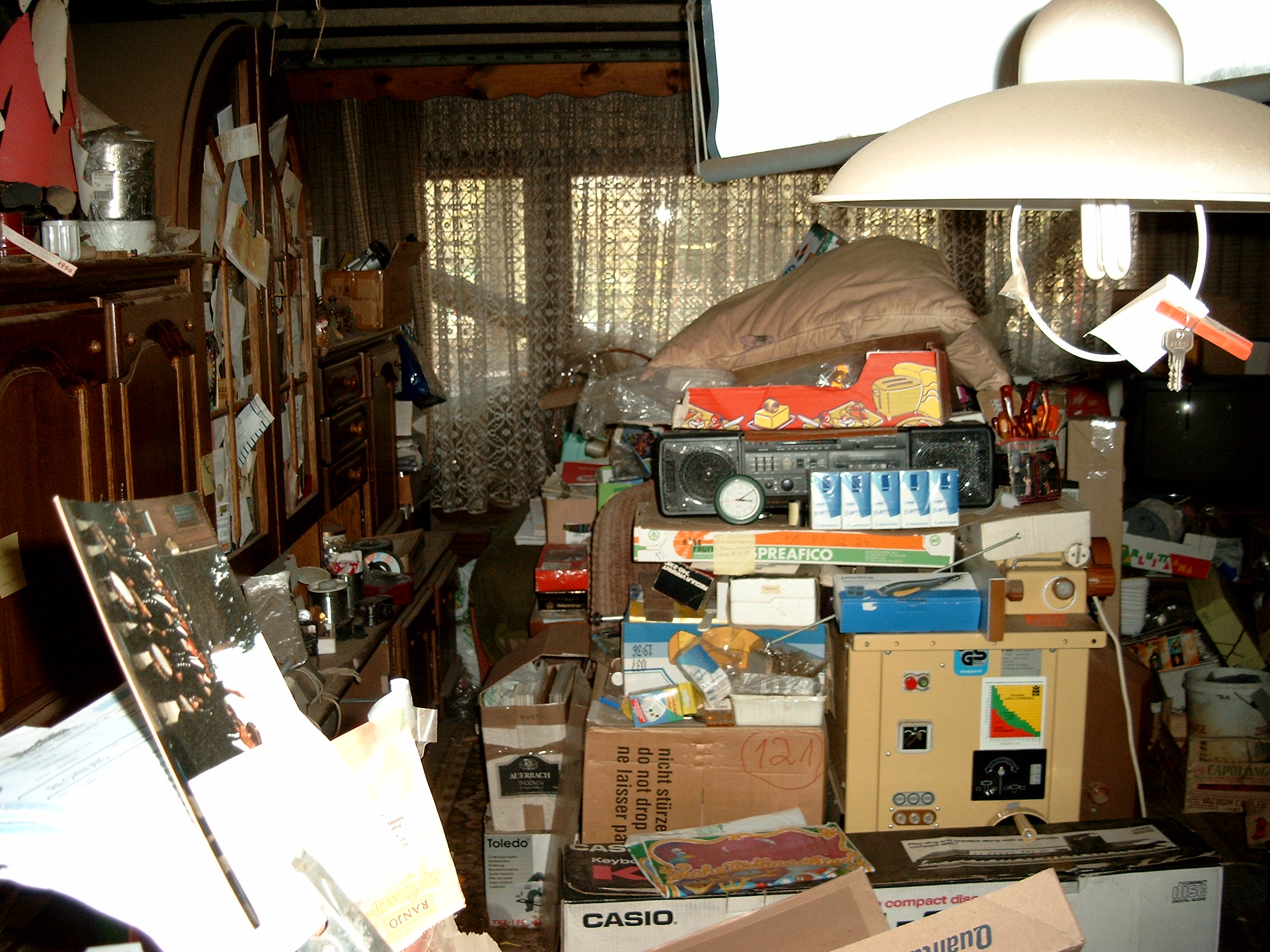 |
| this is not our house...just so you know! |
Our family home is a decent size and I must confess that sometimes
I feel like we are drowning in our stuff. When we downsized about five years
ago from an even larger home, we had a great opportunity to purge, and purge we
did! (the strollers, the car seats, the old IKEA furniture from earlier days).
My intention was to keep our garage free and clear of junk and to use the
laundry room and the furnace room to store seasonal items and occasional products
like wrapping paper and Christmas decorations.
As our sons grew older and their interests evolved, the
space quickly filled with band equipment, vinyl records, large speakers etc. Then
there are the tools. My husband, the sometimes handyman, has collected enough
tools to fill a barn.I’m exaggerating, but we do have an awful lot of
tools and gardening equipment. My own downfall is clothing. I know I should get
rid of old pieces when new ones come in, but I can’t bring myself to do it.
Hence, an overstuffed closet that can make it challenging to find what I’m
looking for.
I don’t consider the penchant for accumulating stuff as just a
physical space problem, but a grave psychological problem as well. I am no
psychologist, but it seems clear to me that we are gratifying some need by
accumulating stuff and then holding on to it much longer than it’s needed.
Maybe we have a deep-rooted fear of another serious economic depression like in
the early 1930s, when jobs and stuff were hard to come by. Maybe we think we
are protecting ourselves from starvation or something by clinging to material
goods.
We tend to believe that much of our stuff has sentimental
value even if it doesn’t have material worth. That chipped china in the box in
the garage that our grandmothers used to serve Sunday dinner on, or the
overstuffed chair that is splitting at the seams, where great-grandpa used to smoke
cigars and read the paper. A professional organizer might suggest we set the
table with the china, take a picture of it to help keep the memory alive and
then chuck it. Same with the chair – do we really need to keep that bulky piece,
taking up space and collecting dust, just for the memory?
In the 1950s, the
average American home was about 900 square feet and in 2011 the average size
was over 2500 square feet. And families were larger back then. Despite the fact
that we have more space now and less people to share it, we have more stuff
than we know what to do with. Some people rent self-storage units so they don’t
have to deal with the overflow. There is over 2 billion square feet of
self-storage space rented out in the U.S., and a proportionate amount in
Canada. Sometimes those storage units are abandoned and the items are auctioned
off—are you familiar with the popular television show “Storage Wars?”
I was happy to see daytime talk-show host Katie Couric doing a show on “getting
organized” not too long ago. And I was particularly pleased to see that she
herself has a "stuff" problem. She brought the viewers into her home office and openly
and honestly went through the messy and over-packed space with a professional
organizer. She had a hard time letting go of things that she hadn’t seen for
years or even remembered that she had. That short TV clip gave a very strong
message about society’s need to cling to things that really don’t matter at the
end of the day. Here is a clip from the show about 5 things you can do to prevent clutter: FIVE RULES TO PREVENT CLUTTER (scroll down to the bottom of the page)
Who is to blame for this societal weakness?
Advertisers...commercial developers (more stores and more selection)...the Joneses?
Or ourselves? Well it’s springtime now, although
it doesn’t feel like it in blustery Toronto, and I think my family should invest some time in finally dealing with the curse of our stuff. By summer we
might feel a little lighter and a lot happier. And I might have more room in my
closet for some new clothes...just kidding!
Thursday, February 21, 2013
The "Creative Pause"
.jpg) I don’t like wasting time and I don’t like being bored. I’m the one in line at the airport reading a book, or in the grocery store checking emails at the check-out. I have a hard time arriving early to events and waiting for the function or performance to begin. I’ll avoid arriving too early to a movie because I don’t want to sit in the theatre waiting in the dark. I buy tickets online in advance and arrive as close to the start time as I can.
I don’t like wasting time and I don’t like being bored. I’m the one in line at the airport reading a book, or in the grocery store checking emails at the check-out. I have a hard time arriving early to events and waiting for the function or performance to begin. I’ll avoid arriving too early to a movie because I don’t want to sit in the theatre waiting in the dark. I buy tickets online in advance and arrive as close to the start time as I can.
I realize that I may sound “type A”, but really I’m not. I’m not a perfectionist or wildly competitive. Nor do I consider myself controlling. But what I am for sure is impatient. Is this a bad quality? That’s what I’m trying to figure out. During job interviews I’ve responded to the question, “What is your biggest flaw?” with, “I’m impatient.” I follow this by saying that I’m motivated to get the job done and find it difficult to wait for others to do their part. I’m efficient. I’m a “let’s get the job done” kind of person. No dilly-dallying.
My family is not like that, especially my teenage boys. They move at their own pace and it’s even challenging for them to get to school on time (despite living just around the corner). One of my sons had over thirty ‘lates’ during his first term. “But I’m only a minute or two late,” he says. He thinks it’s worth the sporadic detentions he receives. He says he hates wasting time sitting at his desk waiting for class to begin. This, I understand.
I bring reading material wherever I go. But this can also cause problems. One time, I was waiting for my number to come up at the passport office. They were at 42 when I arrived and my number was 96, so I pulled out my book and started to read. When I looked up to check the numbers several minutes later, they were only at 46. I’ll be here forever, I thought. My nose went back into my book. The next time I looked up (about forty-five minutes later), the number was at 105. I rushed to one of the kiosks and showed the attendant my 96. “Too bad you missed it,” she said. “Can you please squeeze me in next,” I pleaded? “Sorry,” she said. “You’ll have to get a new number and start over.” I was incensed. “You’re kidding me,” I said. “Sorry,” she said, grimacing. “I can’t help you.”
This past Christmas Eve I had a few errands to do during the day: buy a baguette for the next morning, flowers for the hostess that evening, a book for my husband. But everywhere I went, the lines at the cash were huge, sometimes trailing outside the door. When my turn came to be served at the bakery counter, there were no more baguettes. I left the store frustrated and agitated. The bookstore was no better; the line was about twenty minutes long. Same at the flower shop. The holiday bustle, which I usually enjoy, exasperated me. Walking down the street in search of another bakery, I came across a nail salon, the only establishment not crammed with people. So I went in and had a pedicure – oh, such peace, such joy, such a pleasant interlude! However, by the time I was done, I had to rush home, empty-handed and late, to get ready for the festivities. No time to shower, iron my dress, or tidy up. I was a madwoman, trying to get myself and the family ready and on the road.
And of course, we were late.
What I’ve learned from this reflection is not so much a lesson on time management and patience, but a lesson about boredom. I need to fill every moment with a constructive activity, something that makes me feel I’m using time, one of our most precious commodities, efficiently. “Only boring people get bored,” the saying goes.
The other day I heard about a study revealing that “boring and bored” are not bad words, that when our minds are inactive is when our creativity can flourish. The mind needs to settle down and be still in order to absorb ideas and allow for our imagination to work. This can happen while waiting your turn in a line, taking a shower, or even brushing your teeth. It’s called “the creative pause.” It seems I’m not alone in this “do anything to keep from being bored” mindset. Electronic gadgets are the best boredom fighters ever invented and they are ubiquitous: joggers listening to iPods, pedestrians talking on their cell phones, and until recently, drivers texting on the road.
Not long ago, I asked my doctor if there is a motion-sickness drug that would prevent me from feeling queasy while reading on the subway. She smiled and said, “How about putting your book down, closing your eyes, or watching the people instead?” That would be so boring, I thought at the time.
Perhaps she and those boredom studies are right. Maybe we all need to give ourselves permission to give our minds a break. If I’d had a little more patience and was less worried about being bored, I’d have completed my tasks on Christmas Eve, been less frazzled getting ready, and not been late for the festivities. And maybe I’d have given my head a creative break. But then, I wouldn’t have had nice toenails.
Friday, January 4, 2013
Scrabble Madness
 I have a secret vice. It
involves technology and many hours of semi-mindless diversion. I’m not much of a television watcher or a
video gamer, though I have nothing against others who enjoy these
forms of entertainment. Personally, I’d rather read or socialize than watch television
or play games on screens.
I have a secret vice. It
involves technology and many hours of semi-mindless diversion. I’m not much of a television watcher or a
video gamer, though I have nothing against others who enjoy these
forms of entertainment. Personally, I’d rather read or socialize than watch television
or play games on screens.
Here’s my confession: I
recently discovered online scrabble and I think I’m addicted. As a writer, I
spend a lot of time writing books and articles or researching. I love words and
the way they can be manipulated to make a point. I love the creative aspect of
building a thesis or a story by stringing words together to make an impact. I
love the pictures that can be created with words and the rhythm they can
produce.
Playing scrabble doesn’t do any of these things. It’s more
like putting together a puzzle of letters. I must also admit that
through my penchant for the game, I have learned an array of new words, but haven’t even bothered looking them up. Words like KA, QI, QAT, ZA mean nothing to me other than the points they
garner. The biggest thrill is to use all your letters in one go (a bingo), which earns you fifty bonus points.
You can “befriend” a player and find each other for future games. You can also chat with your anonymous opponents on a message
board. We congratulate each other for a game well-played or for an awesome
word. I learn many
interesting things from these North American players. For instance, a woman told me that her son, who was in
the army reserve, was called in to fight the dangerous fire raging in Southeast Oregon
and she was playing scrabble to distract herself from her worries.
One
gentleman from Arizona, who I became scrabble “friends” with, is almost thirty
years older than me and a whiz at the game. He told me he’s been playing for about
seventy years. I enjoy the competition and his clever, cheerful banter. He also
told me that Canadian players are always polite.
Then there are the sore losers. Some players quit half-way
through because they have no hope of catching up.
The gracious ones continue playing right until the end even though they are
getting creamed. One time, someone was pummeling me and about three quarters of the
way in, my computer crashed. I'm sure my opponent thought I
quit because I was losing.
The problem with this game, as with many computer, video,
television, and various other electronic diversions, is that once you start
playing you can completely lose track of time. One evening I finally stopped at 2:30 a.m. after having been at it for several hours. How
could I whittle away so much time? Not only was I losing precious sleep, but I
would start the next day in a woozy fog. The worst thing was that this kept happening. Instead of reading before going to bed, I found myself playing
scrabble until my head dropped onto the keyboard.
As a freelance writer, I can’t afford to waste a lot of
time. During my waking hours I should be working on assignments or seeking them
out. And when I’m not working, I should be doing something active rather than
sitting in front of the computer playing games. But alas, after spending a few
hours at my work station (which happens to be in my kitchen), instead of using
my break to tackle the dishes or other domestic chores that have accumulated, I
make myself a cup of coffee and launch into a game of scrabble.
I’m starting to understand how my kids can spend hours
playing video games. For years, I’ve been at them to leave the screens
and be more physically active. But understanding it doesn’t
make it all right. I think it’s time to restrict my scrabble time and
muster up some self discipline and become more physically active myself (does housework count?). If I can’t practice what I preach, I have no
right to criticize anyone else for their electronic obsessions. It's time to at least limit my scrabble madness.
By writing about this, I thought I might convince myself to cut back on my online scrabble obsession. But now I just want to play more! I’m afraid that my self-imposed scrabble
moratorium will have to start tomorrow, or the day after...
Sunday, December 23, 2012
Merry Secular Holiday!

My blog has been sleeping for a while, but it’s time to wake
it up. As busy as life can be, I’m going to try to keep to some kind of
blogging schedule, so let’s see how it goes...
MERRY CHRISTMAS, everyone! I hope you’ve enjoyed the season so far and that
you’ve been spending quality time with family and friends (and pets). My family
has shared in loads of Christmas cheer with wonderful people. I
am grateful that my snowbird parents came home from Florida for the holidays, that
my brother and sister are close-by, as well as other relatives and good friends. This
year I’m particularly mindful of my blessings because I have a number of
friends who are going through difficult times right now and the festive
atmosphere is not necessarily helping them feel any better. However, I hope that Christmas will still
bring comfort despite the commercialism and superficiality surrounding the
season.
As you may have noticed, there is a strong movement towards eradicating the word “Christmas” from the public realm. For the sake of political correctness “Merry
Christmas” has been replaced by ‘Happy Holidays,’ Christmas trees replaced by ‘holiday’
trees (sometimes banished altogether), and Christmas parties have become ‘holiday’ parties. The Christmas
traditions that so many people cherish have been relegated to private homes and
private Christian schools. It seems that ‘Christmas’ has become a bad, bad
word.
I take issue with this for many reasons. Notwithstanding our beliefs, the holidays and festivities at this time of year all take
root in the Nativity story, a story that celebrates the birth of Christ.
Whether we take it literally or not, this time of year is meant to be
a joyous, yet reflective time, where we consider the transformational power of
a new beginning. Over the centuries, Christmas has been embellished with many
festive traditions like trees with lights and decorations (borrowed from pagan practices),
Santa Claus, Christmas songs, presents, and lots of good food. But at the heart
of these customs is the spreading of peace, joy, and love, evoked by the story
of the birth of Jesus. Whether we are believers or not, this message is at the
core of what these holidays are all about. Why try to hide its historical
origin by changing the title? People of all faiths are invited to join in, as I
would hope they would invite others to join in their celebrations. To me, this
is what it means to be inclusive.
Recently, I heard a CBC radio interview on the topic of
language used in Federal government offices. It seems that if you are a federal
government employee you can no longer say, “Bless you” when someone sneezes or “Oh
my God!” when you are surprised by something. “Merry Christmas” is an absolute
no, no. If you do say these banished phrases, the federal word police will give
you a warning. I’m not sure what the consequences are for repeat offenders.
When the interviewer asked the federal representative, who was emphatic in her
views, what people should say instead, this was her response: When someone sneezes, you should say, “I heard
that!” to acknowledge the fact that they sneezed. As for OMG, you should say, “Wow!”
as an alternative. Aren’t you glad that your tax dollars are being used for
such important matters?
A few minutes ago, as I was writing this, a friend of my
teenage son, who had stayed for the night, came into the kitchen to say
good-bye. “Merry Christmas, Spencer!” I said. He said Merry Christmas back and
then laughed and said, “I mean, Merry secular holiday!”
So, to avoid being reprimanded for using the offending word
on a public site, I wish you all a merry holiday while celebrating with your
family and friends, and that you enjoy your holiday meals, holiday gatherings,
holiday decorations, holiday music, and holiday cheer!
Monday, February 6, 2012
UNORRUPTED a novel

When atheism and faith meet at her mother’s deathbed, twenty-one-year-old Clare McTavish learns how opposing beliefs can bring people together.
From her comfortable home in Boston to the slums of Kenya, Clare investigates stories of clerical abuse, human rights corruption, and unforeseen loyalties that touched her mother’s life. As she continues to uncover dark secrets—her mother’s role in deposing a pedophile priest, and her absent father’s double life—Clare realizes that the world is not always as it appears and that decency is more prevalent than she'd ever imagined.
 Many thanks to those who attended my book launch for "Uncorrupted" on Feb. 1, 2012. I couldn't have been more pleased with the evening - such friendly faces, great conversation, and keen readers! By purchasing the book you helped me in my writing life and you made a contribution to "Water for Life,"a charitable organization that brings clean water to African Villages. Thanks also to friends and reading enthusiasts who could not come to the launch but bought books anyway.
 I enjoyed seeing so many people from the community as well as those who made the trek from afar. I just wish I could have chatted with you longer. You were a fantastic audience during my presentation and you asked excellent questions during the Q & A.
I'd love to hear from you once you've read the book and to know your thoughts. Please feel free to email me at csandrin@rogers.com or leave your comments below. There is no shortage of perspectives when it comes to literature and spirituality!
If you wish to purchase a print copy or an e-book, you may do so directly through me or order through: Amazon.com or The Blurb Bookstore
Monday, January 30, 2012
UNCORRUPTED - a novel by Carla Sandrin

Dear Blog friends,
I am sorry to have abandoned this blog for so long. I am grateful to all my faithful readers and to all those who have asked me, "What happened to your blog? I used to look forward to it." Well, I've been preoccupied with getting my book ready for publication, among other things. It's been a busy period of life, filled with good, not so good, and a smattering of angst (not to mention turning 50 recently, which has created a mid-life whirlwind for me).
I'm launching my book UNCORRUPTED in a couple of days and my wish is that people will enjoy reading it and will find themselves thinking differently about spirituality and religion. It is a book about transformation, renewal, reconciliation, struggle, and hope.
For those who read the novel and feel inspired to enter into conversation about it, I will soon be starting a new blog for that purpose. It will be a like an online book club, where we can share, discuss, and debate - a place where you can voice your opinions and ask questions, either anonymously or openly.
I hope you'll read the book, share your views, and keep the conversation alive!
If you are interested in checking out the book, you can review the first chapter or place an order at The Blurb Bookstore. Thanks for your support.
Many blessings and best wishes,
Carla
Wednesday, June 15, 2011
Risky Business or Crazy Business?

I think it’s a great show! Not because they make grown men cry, but because we get to see a multitude of fascinating ventures and hear how the entrepreneurs got their businesses off the ground. These are wonderful case studies even though we only get a snippet of the picture. You never know how the Dragons will react to the presentation or to the person. They can love you or hate you and they don’t hold back. After all, they have the power and you are just a squirming little bug. Of course, they are much more inclined to like you and your idea if you know your business, have made some money, and have already achieved a respectable level of success. They are not interested in mere potential, but, rather, want to see that the groundwork has been done, that you’ve made decent headway, and that you haven’t been spinning your wheels and wasting your money.
I would never go on this show. Why? Because
a) I am not much interested in the spotlight and
b) I wouldn’t want to be crushed like a bug (especially on national television)
Even if I had a successful business that needed a cash infusion, I wouldn’t go to the Dragons. Maybe I don’t have thick enough skin. However, I think the show can do a great service to the candidates, as they get exposure for their products and free advice from shrewd, successful business people. Sometimes the Dragons take an active role in an investment and bring additional value through their goodwill and knowhow.
The most investively (I just made up that word) active and often the nicest Dragon, Brett Wilson, has recently left the show after four seasons. Apparently he and the CBC couldn't agree on the terms of his new contract. The show will not be the same without him. But now, he—the dragon with the heart—will be hosting a new show this fall on slice TV called Risky Business.
Here is the premise from a news release published on Brett Wilson’s personal website:
In each episode of Risky Business, Brett will give the daring couple a chance to risk big and win big. As host, he will guide the investors as they choose between pitches made by two different entrepreneurs, each looking for capital and offering a big return. The options will be unusual – such as investing in undervalued vintage wine labels or betting it all on a high stakes one-night-only event. The duo will stake their life savings on one investment, and Brett will invest in the other. It isn't until the end of the episode that it is revealed how each investment performed. Will the risk-taking couple win big or lose it all? Do they out perform Brett? Or does Brett prove he can make money just about anywhere?
I’m glad to see that Brett Wilson will be back on the screen as he is a shrewd (and seemingly affable) businessman with a sharp wit, but I do have concerns about this show. Are they really calling on people to invest their entire life savings? How can amateurs make an intelligent decision to invest in a venture based on a quick pitch? Great for those who succeed, but detrimental for the others. Not everyone has the wherewithal to carry on after that and, in this economy, it’s not simply a matter of moving on to a new venture or a new job.
I think Brett Wilson is great - loved him on Dragon’s Den, but his reputation as “an investor with a heart” may be seriously compromised here.
It’s one thing to solicit people to invest, but it’s another to expect them to gamble with their life savings. I’m wondering if the network has considered what the stakes truly are and what the fallout from this show could be. Why not do a show about people gambling their life savings in Vegas? Or putting all their money into one stock? There is risk and there is risk. And to me, gambling all your hard-earned cash for a possible win (which you have little control over) and a few minutes in the spotlight is far from worth it, even with the nicest dragon prodding you on.
The Director of Casting and Research for "Risky Business" told me in an email that I needn’t worry. He said, “We are taking all people’s interests into account and are maintaining the highest level of respect and concern.” I hope this will be the case; otherwise, the network will be spending a lot on lawyers and psychologists.
I wish them the best of luck and I hope I'm wrong about my concerns. Stay tuned!
Sunday, January 16, 2011
Writing tips to help your message stand out

These tips apply to all writing styles, from web content to business reporting (even emails) to fiction:
1) Use active rather than passive language
The meeting was being chaired (passive) by the marketing director. Instead write: The marketing director chaired (active) the meeting.
2) Use strong verbs rather than an adverb with a weak verb
When she realized she was late for the meeting, she ran quickly to the boardroom. Instead write: When she realized she was late for the meeting, she bolted to the boardroom.
3) Use one strong adjective rather than two adjectives with similar meanings
The shy and quiet trainee gave an interesting and thoughtful presentation. Instead write: The introverted trainee gave a compelling presentation.
4) Avoid unnecessary repetition
Don’t hit the reader on the head with your point.
Times are tough; we are all reeling from this economic slump. If only we weren’t in this crippling recession we’d be able to hire more people.
5) Use simple, straightforward language
The best way to lose your reader is to over-complicate the message:
Due to unforeseen budgetary circumstances, ABC Ltd. will not have the resources to continue implementing the advertising schedule, which was previously determined by the communications committee (too wordy).
Instead write: Due to budgetary constraints, ABC Ltd. has revised its advertising schedule. (simple and to the point)
6) Vary your sentence structure (and rhythm)
I had my performance review. My boss said I was brilliant. He gave me a raise and a promotion. I celebrated with my friends (monotonous).
 Instead write: At my performance review, my boss said I was brilliant. I celebrated my raise and my promotion with my friends.
7) Don’t use clichés; they give the impression that the writer has no imagination.
The sales team gave their competitors a run for their money in landing the account, and the effort paid off in spades.
Instead you could write: The sales team competed vigorously to land the account and the effort was well rewarded.
Saturday, December 25, 2010
A Christmas Wonder

His name was Apollonius of Tyrana.
Professor Bart D. Erhman, New Testament Scholar, and head of Religious Studies at The University of North Carolina at Chapel Hill, teaches about this pagan philosopher—a worshiper of the Greek gods. Apollonius and Jesus lived during the 1st century of the Common Era, each having followers who thought the other was a hoax. As strange as such events sound to us today, people in the ancient world were familiar with stories about divine men who had a connection with the divine realm.
Tom Harpur, theologian and former religion editor of The Toronto Star, has a radical take on the subject in his controversial book The Pagan Christ. He claims there was no such historical figure as Jesus Christ and that his entire existence is a fabrication, based on Egyptian mythology. Harpur writes, “The compilers of the New Testament missed the point entirely that the whole thing was meant allegorically.” He goes on to say, “What all of this means is that the manger of the Christmas story existed in Egyptian mythology as the birthplace of the messiah, or anointed one.”
How do these insights affect people’s beliefs about the birth of Jesus?
Harvard graduate, Christian author and pastor, Dr. Mark D. Roberts, says in his blog series The Birth of Jesus: Hype or History?, “If I didn’t think this really happened, if I thought that the early Christians invented this crazy idea, then I wouldn’t be able to preach the good news on Christmas Eve, or at any other time either.” He continues, “This isn’t just a nice story made up by some creative early Christians. It’s the true story of what God has actually done “for us and our salvation.”
There are over a billion Christians in the world today, many who believe in the literal virgin birth along with the angels, the wise men, and the star of Bethlehem. Every Christmas the Nativity story is presented in all its glory at church pageants and on stages like Radio City, where live animals feed into the spectacle. Priests and Ministers preach about the birth of Jesus, often conflating the accounts of the Gospels, which tell different and sometimes conflicting versions of the story.
The former Prime Minister of Britain and devout Catholic, Tony Blair, recently debated the prominent atheist Christopher Hitchens in Toronto about whether religion is good for society. Tony Blair claims religion inspires people to do good. Hitchens says it’s all bunk and very destructive (but he does have a Christmas tree in his home).
Whichever way we look at it, we cannot deny that Christianity has influenced Western Civilization more than any other religious or political institution in the world. Whether we believe that an anointed child was born in a stable that day, or that the seed of a new religion was planted around that time, we cannot avoid the message that the Christmas season brings—peace, love and goodwill to all.
Thursday, December 16, 2010
Kindles for Kids: will they read more?
 Some kids love to read. Some kids hate it. My two teenage sons fall somewhere in between. Electronics, on the other hand, engage them more than a book ever could.
Give them the internet, their iPods, and video games, and they are as alert as a hungry fox eyeing its prey, but give them a novel, especially one that’s been assigned to them at school, and they suddenly become weary like they’ve just had a long, hard day.
The fact is boys are generally less avid readers than girls, particularly when it comes to literature. This is not a good thing and it definitely will not help them get into university or college.
The fact is boys are generally less avid readers than girls, particularly when it comes to literature. This is not a good thing and it definitely will not help them get into university or college.
According to a study on Canadian Adolescent Boys and Literacy “Boys are often disadvantaged in academic literacy as a result of current curricular emphases, teacher text and topic choices, and lack of availability and acceptability of texts that match their interests...they don’t like to read, some don’t read very well, and a growing percentage of boys are “failing” at school.”
How can educators and parents encourage boys to read more books? Providing them with more gender appropriate choices definitely helps as does letting them make their own selections.
But will boys go to the library or a book store and sift through various titles before they find one that appeals to them? Not likely. Would they peruse the choices available on an electronic reader? Much more likely, I think. Many of the books are free and some new titles cost less than $5.
Not everyone can afford an eReader. And I’m sure it would not be at the top of a teenager’s Christmas wish list. Considering how quick parents are to fork out Christmas funds on other electronic gadgets and video games (the new Call of Duty game for Xbox costs over $70, including tax), would it not be expedient for them to make the extra $70 investment in a device that might inspire reading rather than raging in a war game?
Some people may not agree. The novelty will wear off and the teen will end up losing it, misplacing it, or breaking it, objectors might say. But cell phones and iPods are more likely to meet such a fate.
A skeptic could also argue that kids who don’t read books will not start to read now simply because they have a new way to do it. I’d argue that with over 750,000 books in the electronic library, even a stubborn non-reading teenage boy would find something of interest.
Almost everyone would prefer to have an iPad. You can download books as well as use the internet, watch YouTube videos, TV shows, and podcasts. Given a choice between the various applications, we can guess where a boy’s attention would be directed. And the price—almost $800 can be a deterrent in itself.
Back to the eReader. The price of the Amazon Kindle has already come down from last year’s US $189 to $139 while its Canadian counterpart, the Kobo, sells for CAN $149. The Sony Pocket Reader, another alternative, but more pricey, costs CAN $179.
I asked two of my fourteen-year-old's friends when they last read a book outside of school. One said a few years ago, the other said in the summer. (To be fair, they were all playing scrabble when I asked them this.) Would they read more if they had an electronic reader? They both said yes...they think so.
Teachers may be restricted by the curriculum, but if parents are pro-active and make reading choices more accessible to their kids, perhaps it will show up in the grades. And who knows, before long, we may see eReaders in the classroom (with text books costing $100 each, the thought is not a huge stretch).
If it takes a Kindle to kindle an interest in reading, I say, forget those video games or latest gadgets and invest in an eReader for your son. By the way, I’m sure the girls would be happy to receive one too.
Monday, December 6, 2010
In Conversation with Maurizio Bevilacqua

Mr. Bevilacqua brings 22 years of federal political experience to the table including several cabinet posts, and he is no stranger to landslide victories. Now 50, he’s gathered plenty of tools throughout his career to help him build the city he envisions.
“Politics is my calling,” Mr. Bevilacqua says. “It’s a people business. Whether I’m working as an MP or mayor, everything is transferable...you are a manifestation of all the experiences that you’ve had, negative or positive.” Whether he’s bringing experiences from the soccer field or from the federal cabinet, he intends to use all that he’s accumulated in his new role. “People are the same wherever you go, they are just motivated by different goals and objectives. In city building, you bring in the collective, you analyze what they need to do, and then you drive it hard.”
Why leave a successful federal path to manage a city with a population of about 280,000? “To go to the place where my skills would better represent the people that I serve,” Mr. Bevilacqua says. “There was a need in the city of Vaughan for new leadership—there was a void in leadership—and I felt I could fill that void given my experience.” He believes that people feel closer to the mayor than to their Member of Parliament, who sits in Ottawa and deals with issues that may not directly relate to their constituents.
Another factor that influenced Mr. Bevilacqua’s decision to run for mayor is the declining role of the federal government versus the cities. With greater decision making authority having been passed on to the provinces in recent years, an MP does not have as much control over the future of their constituency as in the past. But the mayor has increasing influence over everyday life and Mr. Bevilacqua’s role will be “more proactive”; for example, getting transit into the city, bringing in new business, creating jobs, and building infrastructure.
“Cities have become more and more important to regional economies,” he says, and he wants to exercise a role in the greater Toronto area. The city of Vaughan is his priority, but he also intends to establish the GTA as a very important regional economy in the North American context.
Mr. Bevilacqua thinks that the strengths of Vaughan have been overshadowed by the allegations of corruption and infighting, and it is now time to highlight all the good things about the city. For example, Vaughan is ten minutes away from the international gateway (Pearson Int’l Airport), it has a strong manufacturing base, the population is highly educated—well above the provincial average, it is an affluent and generous community, there is a high level of employment, it has one of the highest reserves per capita in the province, and the standard of living and quality of life are phenomenal. According to Mr. Bevilacqua, most Torontonians know little about Vaughan, and what they do perceive is unfavourable due to the negative distortions reported by the media.
One of his main priorities is to show the world what Vaughan is all about and to get rid of the negative preconceptions. He is on a mission to rebrand and to create a world class city. By 2031 the population is expected to have grown beyond 400,000 and he sees the goal of bringing Vaughan to a world class level as “the ultimate reality.”
What does this mean? He says there are three realities in life: a distorted reality, an objective reality, and an ultimate reality. “A distorted reality about the city of Vaughan is that it is ‘a city above the law’; the objective reality would be that there are newspaper articles that actually indicate that and endorse that; my ultimate reality is that the city can become a beacon of character and integrity. In my first term, if I can transform the image of the city within Canada, first and foremost, then I’ve done a great job for the people.” He will start by delivering his state of the city address to Toronto. “You’ve gotta go where you want to change the image,” he says.
As far as leadership goes, Mr. Bevilacqua plans to bring positive energy to his new role. In his campaign he did not resort to attacks on his opponents, which is why he thinks he won by such a landslide. He refused to talk about what went wrong with the city in the past and he never attacked a single candidate. “There are certain universal laws that are eternal truths,” he says. “Human decency will always be repaid. The energy you emit is the energy you get back.”
Mr. Bevilacqua brings a different tone and a different approach to council and though he recognizes that he can’t change the culture overnight, he is up for the challenge.
Saturday, October 30, 2010
Stopping that Gravy Train Might Not be so Easy

What did he say? “We have to stop the gravy train?” Or was it, “We have to stock the gravy train?” Rob Ford uttered those words so many times over these past months that sometimes they sounded blurred. But he had one message throughout his campaign for mayor and he stuck to it: “End the wasteful spending, lose the perks, cut the taxes.”
If he isn’t careful, he’ll end up “stocking” the train rather than “stopping” it. And if he doesn’t deliver early on, he won’t be back after four years. “The party with taxpayers money is over, ladies and gentleman,” Ford declared during his victory speech. “We will stop the gravy train once and for all! We are going to get the city back on its financial feet.”
There is no end to the clichés; the words spill out of his mouth like a song he can’t stop singing.
61% of the Toronto voting population came out to vote on October 25th—the largest turnout the city has ever seen. And with over 50% of the vote (he was declared mayor ten minutes after the polls closed), Ford has a clear mandate to put his plan into action. But first he has to make some friends on council. He may have a few already, but he’ll have to scratch a lot more backs if he wants them to jump on his bandwagon. Let the politicking begin!
Forty-four councillors with forty-four different platforms. These leaders may have some concern for city-wide mandates but, at the end of the day, they are there for their own ward, and that’s who they’ll be fighting for. As respected Toronto businessman and former candidate John Tory said, “Rob Ford has his work cut out for him to get his agenda implemented. He has the pulpit, but not necessarily the power.” Tory’s advice: “Do a careful excavation and build on strength as opposed to cutting things down.”
Spending cuts sounds great in theory, but two billion is a lot of cash. Adam Vaughan, city councillor for Ward 20 Trinity-Spadina, said, “If Ford chokes growth there will be adverse consequences. You need to make big changes to come up with that kind of money.”
The unions may create further roadblocks. Ford says he’ll negotiate in good faith with them, but he is going to open the gates to full, transparent competition. They didn’t like him to begin with so it will be interesting to see how this not-so-warm-and-fuzzy relationship unfolds. Both sides will have to move their backs away from the wall if there is any chance of conciliation.
After Ford’s win, unions like the The Central Ontario Building Trades, representing over 60,000 Toronto construction workers, are reeling. Six days before the election they threw their support behind Smitherman (abandoning Pantalone because his chances of winning were near impossible), but to no avail. They were Miller supporters all the way and doing battle with their nemesis will likely end in deadlock.
Ford’s message was clear, concise, and well-communicated. But sounding good isn’t the panacea to Toronto’s problems. Now that he has jumped on the tracks, we’ll be watching to see if he has the ability to slow the train down let alone stop it.
Monday, October 25, 2010
Highway to a Heart Attack

What to do? Call a city councillor, elect a new mayor? The mismanaged roads in Toronto are a travesty. We think of ourselves as a world class city, but our road infrastructure is about as leading edge as our dysfunctional subway system. As I write this, my husband is trapped on the Gardiner once again, inching his way home after a twelve-hour work day. He called an hour and a half ago to say he was en route; the drive should have taken thirty minutes from downtown to our west end home—I’m keeping his chicken warm, but maybe he’ll be too stressed too eat it.
My husband could have taken the subway to work instead this morning, but since it broke down yesterday, he thought he’d take the car. Seems that the better way is just as bad. But the TTC is a whole other story.
How long can this go on? People’s lives are being impacted adversely almost every time they commute. A half-hour drive should not turn into a ninety minute road trip each time we travel in and out of the city. The Jameson bridge midway across the Gardiner has been under construction since the spring of 2010 and will not be ready until the fall of 2011. The closed exit and the reduced lanes are the source of constant gridlock. Funny that whenever I pass the site, the workers are nowhere in sight; maybe they’re busy fixing the subway.
Driving-induced stress is no small concern. I’d like to see a study on how many accidents occur because of highway construction and reduced lanes. I’d like to know how many people have heart attacks or strokes or anxiety attacks because of the increased stress caused by traffic congestion. Studies show that our blood pressure goes up while we’re stuck in traffic. What is the impact on healthcare costs? And how many working hours are wasted while trying to get to our jobs.
Sure, the city needs to maintain roads and highways, and to allow for recreational activities like marathons, but perhaps it’s time to review the pitfalls and benefits of how these things are implemented in our city. Does one section of a major highway really require eighteen months to be repaired? Must we use downtown streets for marathons? Do two important highways need to be closed at the same time?
Play some music and relax while you’re stuck in traffic, a therapist recommends. Think of something positive; imagine yourself on the beach. Make eye contact with other drivers and smile, a well-intended website suggests.
Solid solutions are not straightforward. They require consultation, collaboration and communication—and perhaps a municipal shake-up. For now, how about investing in more expedient highway repairs, which can only help the economy through increased employment and ultimately, a more productive workforce. And as far as road closures are concerned, a little planning goes a long way. Shutting down two major thoroughfares on one busy Saturday does not make sense. Let’s get all our ducks lined up and figure out a plan.
This city tries to heal and repair our traffic problems with Band-Aids and knee-jerk fixes rather than make the investment and perform the crucial surgery that’s required. But the Band-Aids keep falling off and the operating costs become greater as the injuries get worse. In the meantime, drivers are at risk of becoming road-weary and sick. As the city population continues to grow and our citizens continue to age and rage, we’ll need more than a few Band-Aids to keep our roads and our drivers from breaking down altogether.
Friday, October 15, 2010
A New York Jaunt, an Intriguing New Film
 My friend Trish and I flew to New York City last weekend to attend the feature film premiere of my actor cousin and her writer/director husband’s debut movie, JIM. I’d heard about this work in progress during intermittent visits over the past several years and was always intrigued by the latest developments. I recall our conversations about the screenplay as it was being written, the production plans, and the film shoots, which took place in St. Louis, New Jersey and NYC. Produced by the husband and wife team Jeremy and Vanessa Morris-Burke, the indie sci-fi film drew a large crowd on its opening night.
 Jeremy Morris-Burke, who wrote and directed the movie, is a talented and tenacious entrepreneurial type, with a diverse theatre background and a highly creative imagination. Once he had the story in mind, there was no stopping him. My cousin, Vanessa Morris-Burke, is a New York stage actor who has performed in various productions and has worked as a theatre producer.
Playing the cancer-stricken wife of the soon-to-be widowed Jim, Vanessa takes the audience on an emotional roller coaster ride. We’re devastated by her prognosis, encouraged by her near-recovery and then bludgeoned by her sudden demise. Her dying scene is so authentic that her mother (the executive producer of the film) cries every time she watches that scene. A review in the New York Times noted that Vanessa’s work “stands out” in the film.
Notwithstanding my 'cousin' status, I was immensely proud watching Vanessa's dramatic performance. My friend Trish, perhaps a less biased critic because she’d never met Vanessa before, was equally impressed. The lead actor, Dan Illian, also making his film debut, came across a seasoned screen actor, immediately drawing us into his character’s miserable plight. The rest of the acting, the music composition, the special effects, the filming and editing, all came together in a seamless way, engaging the packed theatre for the full hour and forty minute duration.
After the movie was over, we were treated to a Q & A session, where the producers and some of the cast and crew provided insights about the making of the movie. When Jeremy was asked, “What’s next?” he said he needed to focus on the film’s distribution and then take a breather, but I got the feeling from talking to him later that he’s also itching to move on to his next project.
Here’s the plot as described on the film’s website http://www.jimthefilm.com/:
‘Jim’ is a new science fiction drama that juxtaposes a seemingly inevitable near-future of genetic commercialism against a distant post-human dystopia. A desperate, unemployed widower seeks to salvage his legacy by hiring Lorigen, a biotech firm specializing in genetic wares, to create an enhanced child in memory of his wife. Meanwhile, a corrupt industrialist presides over a dead planet awash in genetic inferiority. Nature intervenes and these two worlds converge through an impossible shared dream which will make or break humanity for the long haul…
The film offers a powerful vision of the difficult choices that advancements in science and technology will be forcing people to make in the not so distant future.
Click on the above website if you’d like to see the trailer and if you want to learn more about the movie and the people behind its creation.
As a writer, I know how difficult it is to make headway in the cash-strapped, competitive, ever-struggling world of ‘the arts’; it often takes years of doggedness to finish a project and then additional years of tough slugging to get your work out into the marketplace. You also need really thick skin to withstand the slings and arrows of rejection and criticism. To put things in perspective, Stephen King wrote five novels before he finally got published (Carrie was his break-out novel).
My hat goes off to Jeremy and Vanessa, the production team, and all the cast and crew who joined forces in making this movie a reality. JIM just may be the precursor of the blockbuster waiting to emerge. The Village Voice, the first and largest alternative newsweekly in the U.S., says, “His (Morris-Burke’s) technical virtuosity and thematic ambition mark him as a filmmaker of promise.”
What a thrill to partake in this occasion and to experience the palpable excitement surrounding the opening of a new film. If you happen to be in LA this week, or in any of the places where the film will be playing in the next few months (see the website calendar), be sure to check it out. You will see a mass of young talent who are sure to reappear in other great projects down the road.
JIM is playing an extended run at the Quad Cinema in Greenwich Village until Oct. 21.

Subscribe to:
Posts (Atom)